
Key takeaways
- Light peels (glycolic, lactic, mandelic, salicylic) have little to no downtime and work best as a series of 4–6.
- Medium peels (TCA, Jessner) give bigger change in one or two sessions but mean 5–7 days of real peeling.
- Deep peels are a physician procedure; we do not perform them and most people never need one.
- Prepping with retinoids or brightening agents for two weeks improves results and safety, especially on deeper skin tones.
How a chemical peel works
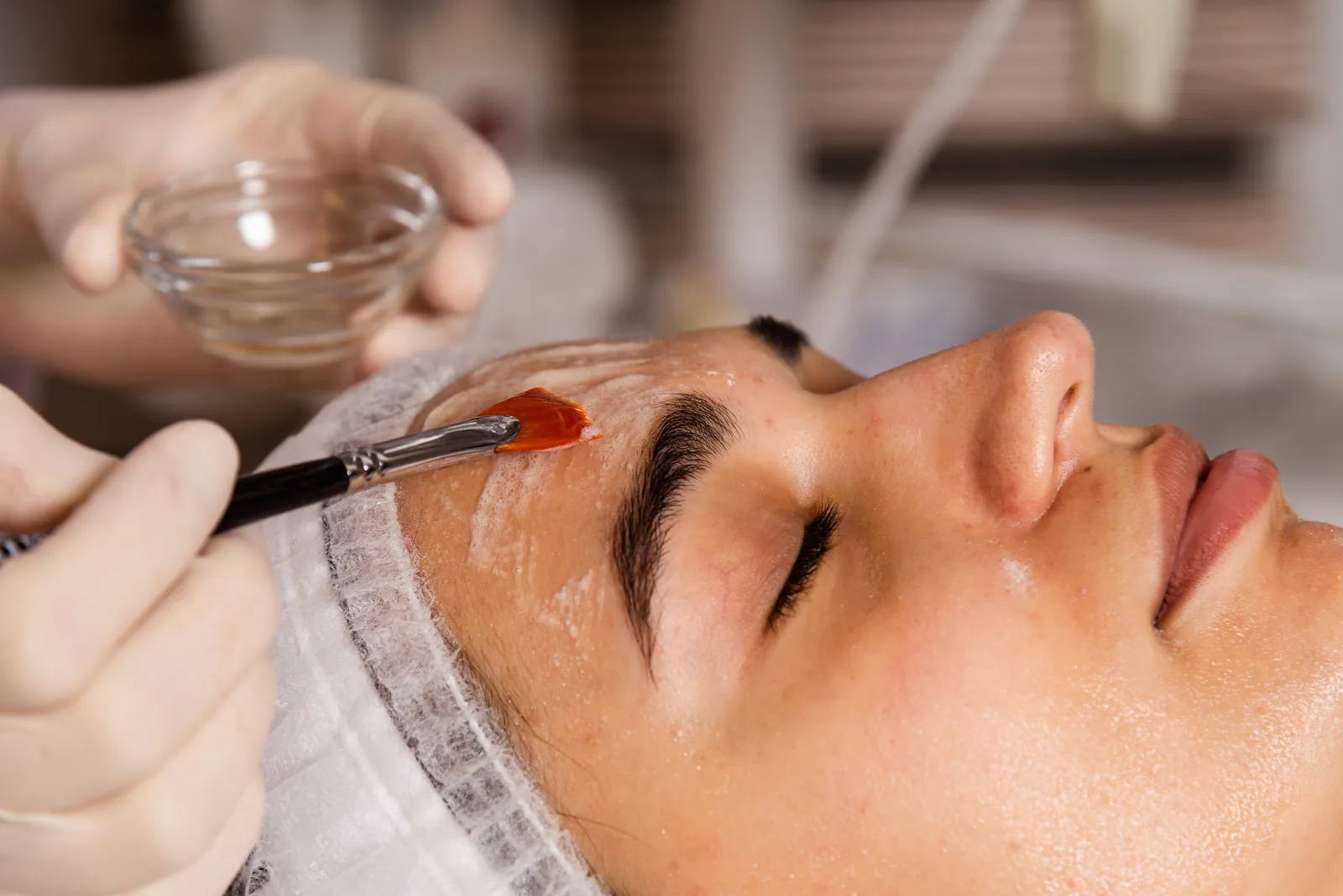
A chemical peel applies an acid solution that loosens the bonds between dead cells on the surface of the skin so they shed faster than they would on their own. Depending on the acid and its strength, the peel may act only on the outermost layer or reach into the upper dermis, where it also triggers collagen production. The result is smoother texture, more even tone, clearer pores and a brighter surface. “Peel” is slightly misleading: light peels often cause only light flaking or none at all.
Peel depths compared
| Light (superficial) | Medium | Deep | |
|---|---|---|---|
| Acids | Glycolic, lactic, mandelic, salicylic (10–30%) | TCA 20–35%, Jessner’s | Phenol / high-strength TCA |
| Treats | Dullness, mild acne, pores, early lines, light pigmentation | Moderate sun damage, fine lines, post-acne marks, some scarring | Deep wrinkles, severe damage |
| Sensation | Tingle and warmth for a few minutes | Stinging, hot for 5–10 minutes | Requires sedation |
| Downtime | None to 2 days of light flaking | 5–7 days of visible peeling | 2–3 weeks; months of redness |
| Sessions | Series of 4–6, every 2–4 weeks | 1–2, 6–8 weeks apart | One |
| Skin tones | All (choose acid carefully) | I–IV with preparation | Physician only |
| At Oxyderm | Yes | Yes | No: referral |
Which acid for which concern
- Salicylic acid: oil-soluble, gets into pores. Best for acne, blackheads and oily skin. Also anti-inflammatory.
- Glycolic acid: smallest molecule, penetrates fastest. Best for texture, dullness and fine lines on normal to oily, lighter skin.
- Lactic acid: gentler and hydrating. Best for dry, sensitive or mature skin and mild pigmentation.
- Mandelic acid: large molecule, slow and even. Best for deeper skin tones, rosacea-prone skin and post-inflammatory marks.
- TCA: the medium-depth workhorse for sun damage, lines and stubborn pigmentation; can be applied in spot form to individual acne scars.
- Jessner’s: a salicylic/lactic/resorcinol blend, often layered under TCA for acne-scarred, oily skin.
Most clients do a series of light peels, perhaps alternating salicylic and mandelic, and only step up to a medium peel for specific, stubborn concerns.
What to expect, day by day
Preparing your skin (this is where results are won)
- Two weeks of a retinoid or brightening routine (azelaic acid, niacinamide, vitamin C) “primes” the skin for even penetration and reduces the risk of post-peel darkening. Essential on skin types IV–VI.
- Stop retinoids, acids and scrubs 3–5 days before the peel itself.
- No sun, tanning or waxing on the area for a week before; no shaving on the day.
- Tell us about isotretinoin (wait 6 months), cold sores (we can pre-treat) and pregnancy (lactic and mandelic peels are the safe options).
Aftercare and how peels fit with other treatments
- Gentle cleanser, bland moisturiser and mineral SPF 30+ only until flaking stops.
- Do not pick or exfoliate: peeling skin protects the new skin underneath.
- No saunas, hot yoga or intense workouts for 48 hours (or until peeling stops after a medium peel).
- Resume actives 5–7 days after a light peel, 10–14 days after a medium peel.
Peels pair beautifully with microneedling (alternate months), brightening facials and, for pigmentation, our skin lightening series. Light peels start from $100 per session at Oxyderm, book a free consultation and we will match the acid and depth to your skin, tone and calendar.
Your questions, answered
Straight answers from the Oxyderm clinical team on the questions this article raises. Browse all 89 answers or ask us directly.
Do chemical peels hurt?
Light peels tingle and feel warm for a few minutes. Medium peels sting and feel hot for 5–10 minutes; a fan and cooling calm it quickly.
How much downtime does a peel have?
Light peels: none to two days of light flaking. Medium (TCA) peels: 5–7 days of visible peeling. We do not perform deep peels.
Which peel is best for acne?
Salicylic acid peels, because the acid is oil-soluble and clears pores. A series of 4–6 every 2–4 weeks works best, often alongside acne facials.
Are chemical peels safe for dark skin?
Yes, with the right acid (mandelic or lactic), conservative strength and two weeks of brightening preparation to prevent post-inflammatory darkening.
How often can I get a peel?
Light peels every 2–4 weeks in a series of 4–6, then monthly or seasonally for maintenance. Medium peels are spaced 6–8 weeks apart.
Can I get a peel while pregnant?
Lactic and mandelic peels are generally considered safe; salicylic and TCA peels are avoided. Always check with your physician first.
How much does a chemical peel cost in Edmonton?
Light peels start from $100 per session at Oxyderm, with series pricing available. Medium peels are quoted at your consultation.
Certified laser technicians, medical aestheticians and nurses in Edmonton. Every article is reviewed by our clinical team; it is general information, not a substitute for a consultation.