
Key takeaways
- Bikini treats what a swimsuit would not cover; Brazilian treats everything front to back. "Extended bikini" sits between the two.
- The names are not standardised across clinics, so confirm the exact boundary before you book rather than after.
- It is one of the most-requested areas precisely because shaving and waxing there cause the most ingrown hairs.
- Shave 24 hours before. Waxing, epilating or tweezing during a course removes the root the laser needs.
The three options, plainly
The words “bikini” and “Brazilian” are used loosely across the industry, which is why people arrive unsure what they have booked. Here is how we define them, and we will confirm the boundary with you before the first pulse.
| What it covers | Usually chosen by | |
|---|---|---|
| Bikini | The hair outside the line of a swimsuit: upper thighs and the top edge. | Someone who only wants the visible edges tidy. |
| Extended bikini | The bikini area plus a little further in along the sides and the top. | Someone who wants more off but not everything. |
| Brazilian | Everything front to back, with or without a strip left at the front. | Someone who wants the whole area clear. |
If you are unsure, start with bikini. Adding more area later is straightforward; you cannot un-treat a follicle.
Why this area responds so well
Hair here is terminal hair: coarse, dark and deeply rooted, with plenty of pigment for the laser to absorb. That is exactly what the laser is designed to target, and it is why the bikini line is one of the most reliable areas on the body to treat.
It is also the area where other hair removal methods cause the most trouble. Shaving a curved, friction-prone area leaves sharp hair tips that curl back into the skin; waxing distorts the follicle. The result is the familiar cycle of bumps, ingrown hairs and dark marks covered in our guide to ingrown hairs and razor bumps. Removing the hair removes the cause.
What a session is actually like
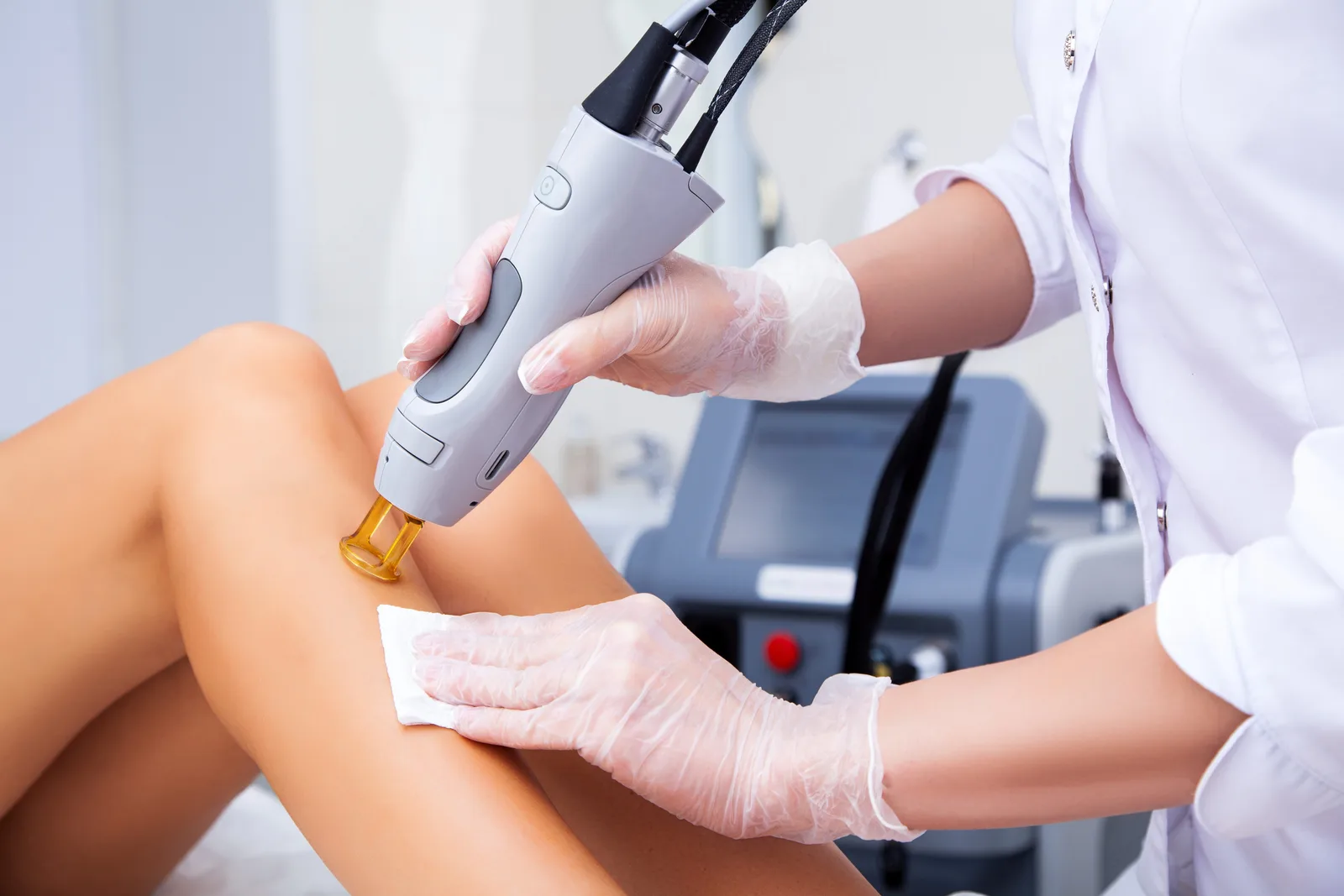
Appointments here are short. You will be given a drape and privacy to change, and your technician will talk you through the area they are treating before they start. The cooling spray fires a fraction of a second ahead of each pulse, so the sensation is cold first, then a brief snap.
- Bony areas and the inner lines feel sharper than the softer parts, and they are small and quickly passed.
- Tell your technician if anything is too much: settings and pace are adjusted, not endured.
- A full course is 6–8 sessions, 4–6 weeks apart, because the laser only affects hairs currently in their growth phase.
- There is no downtime. The follicles look pink and slightly raised for a few hours.
If you are on your period, you can still be treated for a bikini session — wear a tampon or menstrual cup, or reschedule if you would rather. We are asked this constantly and the answer is genuinely up to you.
Preparing, and the week after
- Shave 24 hours before. Never wax, epilate, thread or tweeze during your course.
- No sun, tanning bed or self-tanner on the area for two weeks before and after each session.
- Loose cotton underwear for the first day or two; friction is the main avoidable irritation.
- Skip the gym, sauna, hot tub and pool on treatment day.
- Expect shedding. Treated hairs work their way out over the following week or two. That is not regrowth.
Honest limits
Laser works on pigment in the hair. Brown and black hair on any skin tone responds; white, grey and very fine blonde hair does not, and we will tell you at the consultation rather than sell you a course that cannot deliver. On deeper skin tones we use the Nd:YAG wavelength, which passes through the skin’s own pigment to reach the hair — see laser hair removal for dark skin.
If the dark marks left behind by years of shaving are as much the problem as the hair, say so. They usually fade once the skin stops being re-injured, and we can discuss a brightening plan if they are stubborn.
Your questions, answered
Straight answers from the Oxyderm clinical team on the questions this article raises. Browse all 88 answers or ask us directly.
What is the difference between a bikini and a Brazilian?
A bikini treats the hair that falls outside a swimsuit line — the upper thighs and top edge. A Brazilian treats the whole area, front to back, with or without a strip left at the front. Extended bikini sits between the two. The terms are not standardised across clinics, so confirm the exact boundary before booking.
Does bikini laser hair removal hurt?
It is a more sensitive area than, say, the legs, because the skin is thin and the hair is coarse. The cooling spray fires immediately before every pulse and the area is small, so it is over quickly. Your technician will adjust the settings if it is too much — tell them.
Can I have laser on my period?
Yes, for a bikini session, with a tampon or menstrual cup. For a full Brazilian many people prefer to reschedule, and that is completely fine. It is entirely your call and we are asked it all the time.
How many sessions will I need?
A full course is usually 6–8 sessions spaced 4–6 weeks apart, because the laser only disables follicles that are in their active growth phase and not every hair is in that phase on the same day.
Can I shave between sessions?
Yes — shaving is the only hair removal you should use during a course. Waxing, epilating, threading and tweezing all pull out the root the laser needs to target, which wastes the next appointment.
Will it help with ingrown hairs?
That is one of the most common reasons people treat this area. An ingrown hair needs a hair; once a follicle is disabled it cannot produce one. Most clients notice fewer bumps after the second or third session.
Certified laser technicians, medical aestheticians and nurses in Edmonton. Every article is reviewed by our clinical team; it is general information, not a substitute for a consultation.