
Key takeaways
- A face is not one thickness, let alone the same thickness as a neck or an abdomen.
- Treating thin skin at facial depth is over-treating it; treating body skin at neck depth under-treats it.
- Body areas are larger, so sessions are longer and aftercare has to survive clothing rather than makeup.
- Because it is mechanical rather than light-based, microneedling carries no skin-tone restriction anywhere.
Why depth is the whole conversation
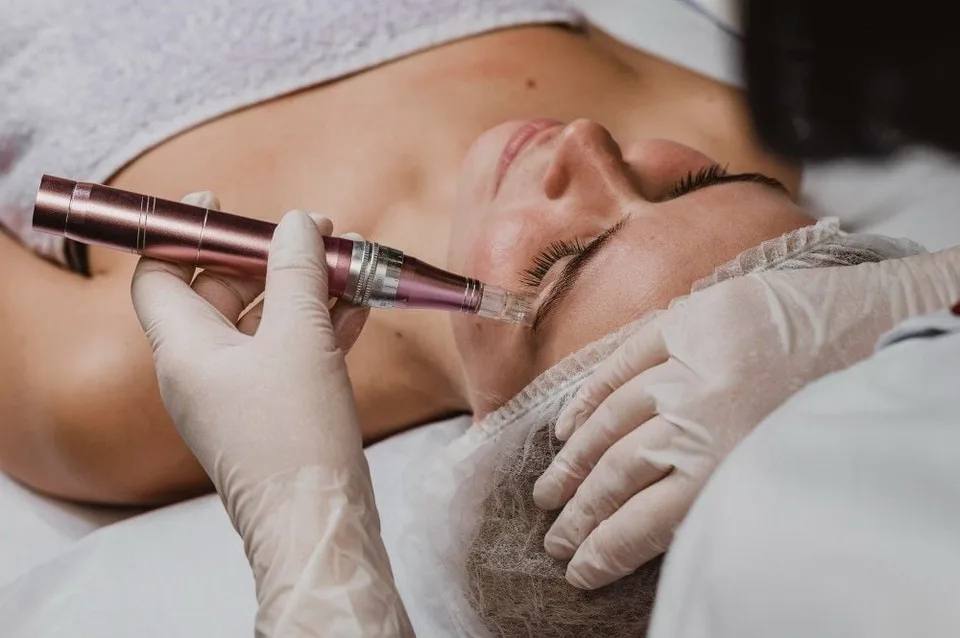
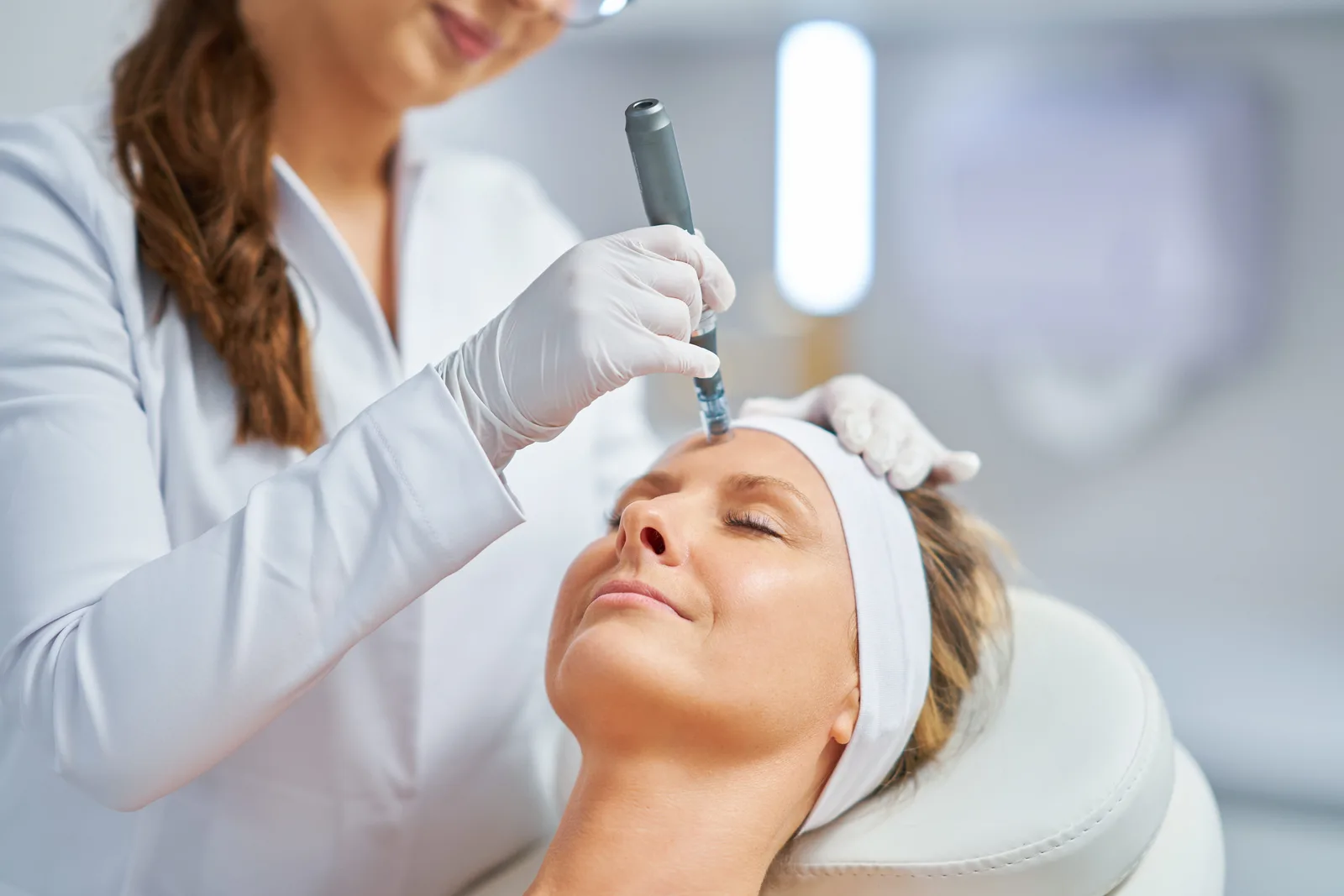
Microneedling works by creating controlled micro-channels so the skin responds with new collagen. How deep those channels go is the single biggest decision your technician makes, and the right depth is different across your own face, let alone between your face and your abdomen.
The eDermaStamp lets depth be changed by zone, which is why one appointment can treat the robust skin over a cheekbone and the far thinner skin at the temple appropriately. A device set once and run over everything either wastes the thick areas or over-treats the delicate ones.
Area by area
| Area | Skin | Typically treats |
|---|---|---|
| Face | Varies by zone — robust cheeks, thin eyelids and upper lip | Texture, pores, acne scarring, fine lines |
| Neck & décolletage | Thin, few oil glands, heavily sun-exposed | Crepey texture, neck lines, sun-damaged chest skin |
| Abdomen, thighs & hips | Thicker body skin, large areas | Stretch marks — scar tissue in the dermis |
| Back & shoulders | Thickest skin, largest oil glands | Pitted scarring left by back acne |
What changes on the body
- Longer appointments. A back or an abdomen is many times the surface area of a face.
- Aftercare meets clothing. Waistbands, bra straps and backpacks rub exactly where you have been treated. Loose clothing for a day is not optional.
- Sweat is the real risk. Skip the gym, sauna, hot tub and pool for the rest of the day — open micro-channels and shared equipment are a poor combination.
- Progress is slower. Mature scar tissue and thicker skin remodel more gradually than a face does.
The constants are the same everywhere: a course of 3–6 sessions, 4–6 weeks apart, one to three days of pinkness, and a result that builds over weeks rather than appearing at once.
What it will not do
Microneedling improves the quality, texture and scarring of skin. It does not tighten loose skin or lift sagging tissue — that is a structural problem in a different layer, and radio-frequency tightening or a PDO thread lift addresses it. It does not remove stretch marks or scars; it makes them shallower and less distinct. And it is not appropriate over active breakouts, broken or infected skin, or during certain medications.
If what is bothering you is firmness rather than texture, we will tell you at the consultation and point you somewhere that can actually deliver it.
Your questions, answered
Straight answers from the Oxyderm clinical team on the questions this article raises. Browse all 88 answers or ask us directly.
Is microneedling on the body the same as on the face?
The principle is identical but the depth, the appointment length and the aftercare are not. Body skin is thicker and the areas are far larger, so sessions run longer and the result builds more gradually.
Why is the neck treated at a different depth?
Neck and chest skin is thinner than facial skin with fewer oil glands and less structural support. Treating it at facial depth would be over-treating it, so your technician reduces the setting.
How long is the downtime?
Expect a flushed, mildly sunburned look for one to three days, depending on the depth used. Deeper settings for scarring produce more flushing than a light texture pass.
Is it safe on darker skin tones?
Yes. Microneedling is mechanical rather than light-based, so it does not target pigment and carries no skin-tone restriction. Strict sun protection afterwards matters for everyone, and especially where post-inflammatory pigmentation is a risk.
Should I add PRP?
Clients treating scarring or overall skin quality commonly do. PRP uses platelets from a small sample of your own blood, applied into the channels the needling creates, and it makes the appointment longer. Your technician will advise whether it is worth it for your skin.
Can I have it done while I have active acne?
Not over active, inflamed or infected breakouts. The usual sequence is to settle the acne first, then treat the scarring left behind — otherwise new lesions simply create new scars behind the ones just treated.
Certified laser technicians, medical aestheticians and nurses in Edmonton. Every article is reviewed by our clinical team; it is general information, not a substitute for a consultation.